From “Building Houses” to “Manufacturing Buildings”

The Industrialized Practice of CSCEC Science and Industry Green
Technology in 3D Modular and Low-Carbon Buildings
R-Vision Global Industry Insight
Author:Nico Zhao
A major transformation is taking place in the construction industry. Buildings are gradually evolving from traditional on-site construction projects into industrial products that can be designed, manufactured, transported, installed, maintained, upgraded, and even dismantled and recycled.
Within this transformation, CSCEC Science and Industry Green Technology, part of the China State Construction Engineering Corporation system, is a highly representative practitioner. What makes the company noteworthy is not simply the term "modular construction," but its simultaneous advancement of building industrialization and green, low-carbon energy systems.
I. Backed by One of the World's Largest Construction Groups
CSCEC Science and Industry Green Technology is affiliated with China Construction Science and Industry Corporation Ltd., which operates within the China State Construction Engineering Corporation (CSCEC) system. CSCEC is one of the world's largest investment and construction groups. In 2025, CSCEC recorded approximately USD 309.2 billion in revenue and approximately USD 677.0 billion in newly signed contracts, ranking No. 16 on the 2025 Fortune Global 500 list.
Therefore, CSCEC Science and Industry Green Technology is not merely a factory producing "modular rooms." It represents an industrialized building system supported by the engineering experience, steel-structure expertise, design and research capabilities, supply-chain organization, and global project-delivery capacity of a major construction group.
The company focuses on two principal business lines: first, 3D modular construction (MiC); and second, green, low-carbon buildings and green energy. One addresses how buildings can be constructed more efficiently, while the other addresses how completed buildings can operate with lower energy use and lower carbon emissions.
II. 3D Modular Construction: Moving Most Work from the Site to the Factory
Traditional construction requires a large amount of work to be completed on site, including structural work, mechanical and electrical systems, plumbing, partitions, ceilings, flooring, bathrooms, doors and windows, and interior fit-out. Multiple trades must also carry out complex, overlapping operations.
3D MiC modular construction changes this logic. A building is first divided into a series of three-dimensional modules within a digital design system. The modules then enter the factory, where the structure, mechanical and electrical systems, plumbing, and interior fit-out are manufactured and highly integrated. According to publicly available information from CSCEC Science and Industry Green Technology, more than 90% of the relevant work - including structural manufacturing and interior fit-out - can be completed in the factory.
This means that when a module arrives at the construction site, it is no longer a collection of steel, panels, and components. It is a three-dimensional building unit that is already close to finished condition. The site is primarily responsible for foundations, lifting, connections, interface work, and final commissioning, substantially reducing on-site labor, trade interference, rework, and weather-related risk.

Figure 1. Modular Bathroom Fit-Out: Wall finishes, sanitary fixtures, storage, plumbing, drainage, and mechanical and electrical interfaces can be integrated in the factory, demonstrating the finished-product delivery capability created by moving more than 90% of the work into a controlled manufacturing environment.

Figure 2. Modular Bedroom Fit-Out: Wall finishes, ceilings, flooring, lighting, furniture, and equipment can be assembled as an integrated package in the factory, allowing the module to be installed and commissioned quickly after arrival on site.
III. From Experience-Based Construction to Digital and Intelligent Manufacturing
CSCEC Science and Industry Green Technology promotes the idea of "Build houses just like building cars." The core of this statement is not simply speed; it is the creation of standardized design, intelligent manufacturing, quality inspection, and digital management systems similar to those used for industrial products.
Its technology system includes AI-assisted design, automated production lines, intelligent manufacturing equipment, digital-twin management, and high-precision 3D laser-scanning inspection. Module dimensions and assembly accuracy can be controlled to the millimeter level, while intelligent inspection can significantly improve quality-control efficiency.

Figure 3. Automated Modular Production Workshop: Automated production lines, intelligent manufacturing equipment, digital management, and standardized quality-inspection systems enable building modules to be manufactured at scale in the same disciplined manner as industrial products.
The most important change is that building quality is gradually shifting away from heavy dependence on the individual experience of on-site workers and toward digital models, industrial equipment, and standardized quality control.
Over the past two years, CSCEC Science and Industry Green Technology has delivered nearly 20,000 modules. Large numbers of modules are shipped from its factories to different projects every day. This demonstrates that modular construction is no longer an experimental product; it is developing into a system with large-scale manufacturing and global delivery capabilities.
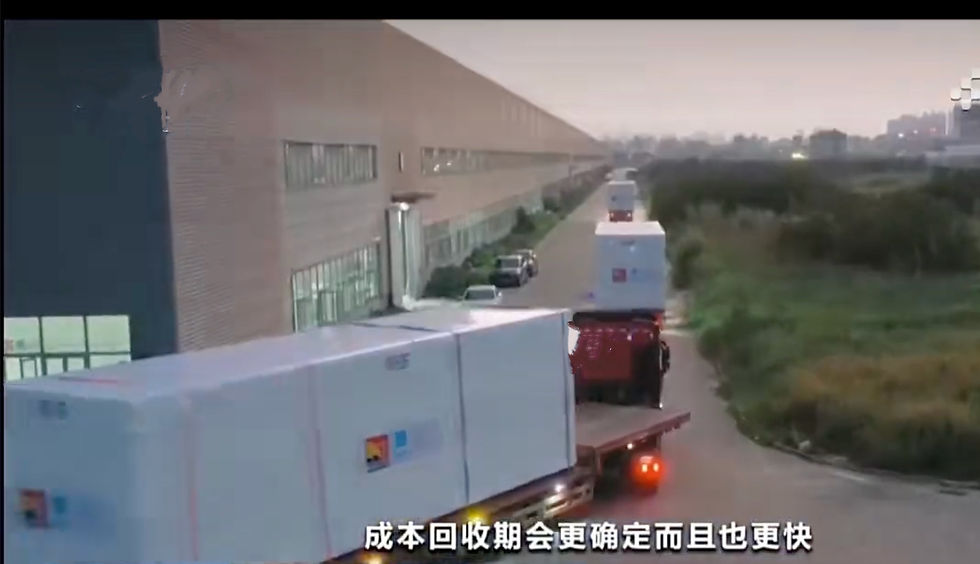
Figure 4. Modular Building Transportation: After protective packaging is completed, highly integrated three-dimensional modules can be transported in batches to project sites by specialized vehicles and through port or container logistics systems, enabling industrialized, standardized, and global delivery.
IV. The Hospital "Drawer-Type" Module: Buildings Become Replaceable and Upgradable
Hospital projects provide a particularly clear example of the difference between modular construction and traditional building methods. In a hospital project in Shenzhen, China, CSCEC Science and Industry designed patient-room modules that can be inserted into the main structure like drawers.
After a hospital has operated for more than a decade, major maintenance of internal piping, services, or equipment may be required. Instead of shutting down the facility for prolonged on-site work, an entire module can be removed from the main structure, returned to the factory for repair or upgrading, and then reinstalled. This approach has substantial practical value for hospitals that cannot suspend operations for extended periods.
This also changes how we understand buildings. In traditional construction, many systems become permanently fixed inside the building once it is completed. Modular construction, however, begins to give buildings the product attributes of maintainability, replaceability, and upgradeability.

Figure 5. Replaceable "Drawer-Type" Hospital Module: A patient-room module can be inserted into or removed from the main structure like a drawer, allowing future maintenance, equipment upgrades, and reinstallation to be completed more efficiently.
V. The Complete Logic: Design - Manufacturing - Transportation - Installation - Upgrading - Circular Reuse
To fully understand modular construction, it is not enough to examine factory production alone. Modular construction is a complete life-cycle industrial chain:
Digital Design -> Intelligent Factory Manufacturing -> Quality Inspection -> Product Protection -> Digital Logistics -> On-Site Lifting and Installation -> Operation and Maintenance -> Module Upgrading or Replacement -> Dismantling and Circular Reuse
CSCEC Science and Industry Green Technology also identifies demountable and recyclable modular-building technology as a core technical direction. This means that the value of a future building should not be assessed only by its initial construction cost, but also by maintenance, upgrading, resource reuse, and total carbon emissions over several decades of operation.
VI. The Second Business Line: Zero-Carbon Buildings and Green Energy
However, focusing only on 3D modular construction reveals only half of the picture. The company's other major business line is green, low-carbon buildings and green energy.
Its business system covers zero-carbon buildings, photovoltaic power generation, building-integrated photovoltaics (BIPV), energy storage, and digital management of energy use and carbon emissions. The core logic can be summarized as: energy efficiency -> power generation -> energy storage -> energy management and control.
The first step is to reduce the building's own energy demand through measures such as high-performance building envelopes, exterior insulation, reflective coatings, low-emissivity (Low-E) glazing, and architectural shading. The second step is to enable the building to generate energy through rooftop photovoltaics, facade-integrated BIPV systems, and photovoltaic shading devices. The third step is to combine these measures with energy-storage systems, energy and carbon-monitoring platforms, and intelligent energy management.
In this way, a building is no longer merely an energy consumer. It gradually becomes a green energy unit capable of conserving energy, generating power, storing energy, monitoring performance, and optimizing operations.
From a broader perspective, CSCEC Science and Industry Green Technology is integrating two important future directions: 3D Modular Construction + Zero-Carbon Buildings and Green Energy. One addresses how buildings are constructed; the other addresses how they operate sustainably over the long term.
VII. Why This Deserves Attention in Canada
Canada's construction market faces several simultaneous challenges: high labor costs, shortages of skilled trades, limited winter construction windows, pressure to increase housing supply, and increasingly demanding green-building requirements. If China's mature intelligent-manufacturing and supply-chain capabilities can be combined with Canadian design and engineering, codes and certification, local installation and construction, and long-term after-sales service, a new model of cooperation in the building industry may emerge.
The real opportunity is not simply to "ship Chinese houses to Canada," but to redefine the construction value chain. Which work must be completed on site in Canada? Which work can be completed in advance in an intelligent factory? Which systems are most suitable for localization? Which modules are suitable for cross-border manufacturing? How can total cost, on-site labor, and life-cycle carbon emissions be reduced while fully complying with Canadian codes and standards?
VIII. R-Vision Global: Exploring and Validating a Practical Path for Implementation in Canada
R-Vision Global is currently maintaining an active dialogue with CSCEC Science and Industry Green Technology and other leading Chinese building-material and construction companies. The discussions focus on how 3D modular construction, green and low-carbon buildings, building-energy systems, prefabricated exterior-wall systems, and innovative exterior cladding can be integrated with Canada's construction industry. R-Vision Global is not focused on importing a single product. It is carefully evaluating a combined model better suited to the Canadian market:
China's Industrialized Manufacturing Capability + Canadian Design and Engineering + Canadian Codes and Certification + Local Construction and Installation + Long-Term Operations and After-Sales Service
R-Vision Global hopes to work with forward-looking, like-minded Canadian developers, architects, engineers, general contractors, and professional organizations. Starting with a suitable pilot project, the partners can progressively validate design, certification, cost, schedule, construction, and energy performance through real-world implementation. We are not seeking a simple import model; we are exploring a practical model for building industrialization and green-energy cooperation that can genuinely succeed in Canada.
Over the past decade, the world has experienced both the information-technology revolution and the transformation brought by artificial intelligence. Canada has world-class AI talent and research institutions, but it has lagged in industrial commercialization and large-scale application. Its complete domestic industrial chains and independent innovation systems remain underdeveloped, while parts of its economy and external policy remain significantly constrained by external factors. Following the breakdown of Canada-U.S. trade negotiations on August 23, 2026, Canada should further diversify its investment and trade relationships, strengthen engagement and cooperation with China, Latin America, Southeast Asia, and other emerging economies, and reduce excessive dependence on a single U.S. market. Within this broader trend, there is substantial potential in building deeper and more direct connections and cooperation between China and Canada.
Nico Zhao
President of R-Vision Global
August 23, 2026


留言